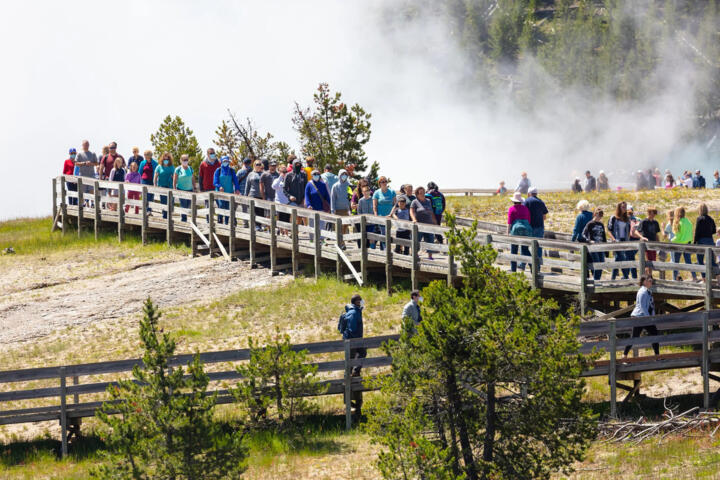
Seasonal Crowd Volatility
Crowd volatility measures how much visitor pressure rises or falls across seasons, not just the average number of people. A park can be “busy” every month yet show low volatility, while another park may feel empty in shoulder months and crowded during a short peak window. For planning, volatility matters because it changes trail availability, parking friction, shuttle wait times, and the likelihood of sold-out timed-entry slots.
In the U.S., visitor patterns often track school calendars, weather windows, and reservation rules. Some parks add timed entry or require permits for certain areas, which can dampen crowd spikes in specific zones while leaving other areas crowded. The practical result: two parks with similar annual visitation can feel very different on a given week in July versus late September.
To rank parks by volatility, you need a consistent signal. The most comparable sources are official visitation statistics by month (where published), reservation availability trends, and real-time indicators such as campground occupancy or trailhead parking constraints. When a park uses timed entry, the “crowd” shifts from general walk-up demand to the reservation system, which still produces volatility when slots open and close.
As a side observation, I’ve seen travelers misread “peak season” as a single date range. In practice, a park can have multiple peaks: a warm-weather hiking surge, a holiday weekend surge, and a school-break surge that overlaps with local events.
What People Get Wrong
Many travelers assume that crowding follows a simple pattern: summer is worst, winter is quiet. That pattern holds for some parks, but it breaks when a park’s main attractions depend on snow conditions, wildfire smoke seasons, or road access. A park with limited winter access can be quiet in January yet suddenly spike when a key road reopens in spring.
Another common mistake is treating “annual visitation” as a proxy for crowd volatility. Annual totals blend together months with very different demand. A park with moderate annual visitation can still show high volatility if its visitation concentrates into a few weeks when weather and access align.
People also underestimate how supporting technologies change the crowd experience. Timed-entry systems, shuttle schedules, and campground reservation rules shift where congestion forms. If a park restricts access to a popular corridor, the crowd may spread to adjacent trails instead of disappearing, which can still feel like a surge even when the reservation system looks controlled.
Finally, travelers often ignore the difference between “park-wide” crowding and “site-specific” crowding. A park can be manageable at visitor centers while a single viewpoint, lake loop, or shuttle stop becomes the bottleneck. That bottleneck drives perceived volatility more than the overall park attendance.
How To Plan Around Volatility
Use Official Signals First
Start with the park’s official pages for current rules: timed entry, shuttle operations, road status, and campground availability. Then cross-check with any published monthly visitation summaries or annual reports. If the park uses a reservation system, track how far in advance slots open and how quickly they fill during your target week. Even a simple spreadsheet helps; I’ve used a “slot open date” column in 2024 to compare two weeks that looked similar on paper.
For parks with dynamic road access, read the “road status” updates closely. A late spring reopening can create a short, intense peak that lasts only a few weeks. That peak can be more volatile than a full summer season because the demand curve rises quickly once access returns.
Match Your Dates To Demand
Volatility often spikes around weekends, federal holidays, and school breaks. If you can shift by 1–2 days, the crowd change can be larger than moving by a whole month in some parks. For example, a park with timed entry may show stable weekday conditions but heavy weekend pressure when families travel together.
Weather also acts like a demand amplifier. A sudden stretch of clear skies can pull forward day-hikers and photographers, especially near viewpoints and short scenic loops. This is why “forecast-based planning” matters: a calm week can turn busy after a multi-day weather window.
Plan For Bottlenecks, Not Averages
Identify the specific sites that concentrate demand: shuttle stops, trailheads with limited parking, popular overlooks, and campground loops. Then plan your route so you arrive before the first wave or after the last wave. If a park offers early entry for certain areas, treat it as a scheduling tool, not a guarantee of emptiness.
When you choose trails, consider how access constraints interact with crowding. A short, well-marked loop with a single parking area can feel more volatile than a longer route with multiple trailheads. People rarely distribute themselves evenly; they cluster where logistics are easiest.
Use Reservations As A Filter
Timed entry and permits can reduce walk-up chaos, but they also create a “reservation cliff.” When slots sell out, visitors either shift to other sites or change their travel dates, which can create a sharp crowd swing. Track your backup options: if your first-choice area is full, decide in advance which alternative trailhead or scenic drive you’ll use.
Campgrounds show similar patterns. If a campground is fully reserved for a weekend, nearby day-use areas may become more crowded. That trade-off is predictable enough to plan around, but it requires checking availability rather than guessing.
Educational Case Examples
Scenario A: Glacier-like Road Reopening Effect (Anonymized). A traveler plans a late May trip to a northern park with seasonal road access. The park’s main scenic drive reopens mid-month, and the traveler chooses a week that includes a holiday weekend. The reservation system for a popular viewpoint fills faster than expected, and parking at the trailhead becomes the bottleneck. By switching to a midweek arrival, the traveler avoids the holiday overlap and experiences a noticeably calmer morning window.
Scenario B: Timed Entry Creates a Weekend Cliff (Anonymized). A family targets a park with timed entry for a signature valley. They book the earliest available slot for a Saturday but discover that nearby overflow parking and shuttle demand still spike later in the day. On Sunday, the family arrives at the same time but finds the shuttle line shorter because some visitors shifted to other areas after Saturday sold out. The crowd experience changes more by day-of-week than by the calendar month.
Volatility Comparison Checklist
| Decision Factor | Low Volatility | Medium Volatility | High Volatility |
|---|---|---|---|
| Primary Driver | Weather stays workable across many months | Seasonal weather shifts demand gradually | Access or conditions change abruptly (road, snow, smoke) |
| Reservation Impact | Few timed-entry constraints | Timed entry exists but spreads demand | Timed entry creates a weekend cliff |
| Parking/Transit Bottlenecks | Multiple trailheads reduce clustering | One main bottleneck with moderate overflow | Single bottleneck drives perception of crowding |
| Best Planning Move | Pick any weekday and arrive mid-morning | Shift by 1–2 days around weekends | Avoid peak overlap; book backups early |
Step-by-step checklist for your target week:
- Check the park’s current road status and any seasonal closures for your dates.
- List the top 2–3 sites you want, then check whether each has timed entry, permits, or limited parking.
- Look at campground and shuttle rules; a sold-out campground can push day-use demand into nearby areas.
- Choose arrival times that avoid the first and last shuttle waves when schedules are posted.
- Plan one “if sold out” alternative site that uses a different trailhead or scenic drive.
A small aside: if you use a mapping app, confirm the version date of the offline maps you download. Outdated offline layers can mislead you about road closures and trail access.
Common Mistakes To Avoid
Booking a trip based only on “best months” can fail when a park’s access changes mid-season. Road construction, wildfire closures, or smoke advisories can shift crowds and also shift which areas remain open. Your plan needs a contingency that matches the park’s closure patterns, not just the weather forecast.
Another mistake is assuming that a timed-entry system guarantees low crowds inside the restricted zone. Visitors still arrive in waves, and the bottleneck can move to restrooms, viewpoints, or the first mile of a trail. If you want a calmer experience, you still need an arrival-time strategy.
People also overpack their itinerary with “must-do” stops that all depend on the same parking area. When that area fills, the day becomes a chain of delays. A better approach is to group activities by geography and schedule one flexible block that can absorb changes.
Finally, travelers sometimes ignore safety and air-quality constraints. Smoke can reduce visibility and change the feasibility of strenuous hikes. Checking official air-quality advisories and park alerts matters even when crowding looks manageable.
FAQ
How Do I Measure Volatility?
Use consistent signals: monthly visitation reports when available, reservation slot behavior, and documented seasonal closures. Compare weekday versus weekend demand for your target sites, not just the park entrance.
Do Timed Entry Systems Reduce Crowds?
They often reduce walk-up congestion, but they can shift crowding to specific times, shuttle stops, or nearby overflow areas. The crowd experience can still change sharply between sold-out and available days.
Which Months Are Usually Most Volatile?
Volatility peaks when weather and access align with school breaks and holidays, or when a seasonal road reopens. In parks with snow-dependent access, volatility can spike around reopening windows rather than mid-summer.
What Data Sources Are Most Reliable?
Start with the park’s official alerts, reservation pages, and road status updates. For broader context, use government visitation reports and official shuttle or campground reservation systems rather than social media crowd estimates.
How Can I Reduce Crowds Without Changing Parks?
Shift by day-of-week, arrive early or late relative to shuttle schedules, and plan backups at different trailheads. Group activities by area so you do not lose time when one parking zone fills.
Author's Insight
Crowd volatility is a planning concept, not a single number. It emerges from how demand concentrates around access, reservations, and bottlenecks, then how those constraints change across seasons. A careful approach treats “crowds” as a time-and-location problem: the same park can feel calm at one trailhead and crowded at another.
When official data is limited, the most defensible method is to triangulate: reservation behavior, road status, and the park’s own operational rules. I’ve also found that travelers benefit from tracking one week’s experience against the next year’s rules, since policies can change between seasons.
If you want a ranking, build it from your own target sites and dates rather than relying on a generic “ranked list” that ignores timed-entry rules and closure patterns.
Key Takeaways
- Volatility describes how sharply crowding changes across seasons and within weeks, not just how busy a park is on average.
- Annual visitation totals can hide short peak windows driven by road access, weather, and reservation rules.
- Timed entry often shifts congestion to specific times and overflow areas, so arrival-time planning still matters.
- Use official alerts, reservation pages, and road status to build a week-specific plan with backups.
- For calmer days, prioritize weekday travel and avoid holiday overlaps where demand concentrates.